Typical Wedding Schedule Vital Tips
- 1.
What Exactly Goes Down in a Typical Wedding Schedule?
- 2.
Breaking It All Down: The Ceremony First, Always
- 3.
Cocktail Hour: Where Strangers Become Besties (Temporarily)
- 4.
Dinner, Speeches, and That One Drunk Toast
- 5.
First Dance, Parent Dances, and the Cake Smash Heard ‘Round the Room
- 6.
When to Cut Loose: Open Dancing and Late-Night Snacks
- 7.
Timing Is Everything: The 30-5 Minute Rule Explained
- 8.
Budgeting Like a Boss: The 50-30-20 Rule for Weddings
- 9.
What to Actually Include in Your Wedding Schedule Doc
- 10.
Syncing It All: Tools, Tips, and Internal Wisdom
Table of Contents
typical wedding schedule
What Exactly Goes Down in a Typical Wedding Schedule?
Ever wonder why Aunt Carol always shows up late to weddings and still manages to snag the last piece of cake? Maybe it’s ‘cause she knows the typical wedding schedule like the back of her sequined clutch. Truth is, most weddings—whether they’re barefoot-on-the-beach or black-tie-at-a-barn—follow a loose but reliable rhythm. From the pre-ceremony jitters to the post-reception glow (and hangover), there’s a method to the madness. And yep, that includes time for you to cry-laugh during vows, spill champagne on your cousin’s tux, and still make it to the bouquet toss without tripping over your own train. The typical wedding schedule ain’t just a list—it’s a roadmap to love, chaos, and maybe a little bit of magic.
Breaking It All Down: The Ceremony First, Always
The heart of any typical wedding schedule starts with the ceremony—duh. But timing matters more than you think. Most couples kick things off between 3 PM and 5 PM, especially if they’re aiming for that golden-hour photo op. Guests usually arrive 30 minutes early, giving ‘em time to find their seats, whisper “who’s that?” about the mystery groomsman, and panic when they realize they forgot a gift. The ceremony itself? Roughly 20–45 minutes, depending on how many readings, songs, or interpretive dances the couple sneaks in. Keep it tight, folks—nobody wants to miss cocktail hour because Uncle Frank’s blessing ran long. A well-paced typical wedding schedule respects both emotion and appetite.
Cocktail Hour: Where Strangers Become Besties (Temporarily)
Right after “I do,” the newlyweds vanish—poof!—into photographer limbo while guests shuffle into cocktail hour. This isn’t just a break; it’s social glue. Passed hors d’oeuvres, open bar, and awkward small talk with your partner’s third cousin from Des Moines? All part of the typical wedding schedule charm. Pro tip: this window usually lasts 60–90 minutes, just enough time for the bridal party to snap those dreamy portraits and for you to down two mini martinis before dinner. Don’t skip it—it’s where half the wedding gossip gets born. And hey, if your typical wedding schedule skips cocktail hour? You better have a damn good reason… or unlimited tacos.
Dinner, Speeches, and That One Drunk Toast
Once everyone’s buzzed and slightly sunburnt (if it’s outdoors), it’s time for the reception proper. Dinner typically kicks off within 90 minutes of the ceremony ending. Seating charts matter here—put your rowdiest friends near the DJ, not Grandma. Then come the speeches: maid of honor, best man, maybe Dad trying not to cry into his meatloaf. Timing-wise, allocate 10–15 minutes per speaker. And remember: the typical wedding schedule expects at least one overly emotional, slightly slurred toast that makes everyone laugh-cry. Budget around $75–$150 per guest for food and drinks (yep, in USD), ‘cause quality matters when you’re feeding 150 people who’ve been waiting since 3 PM to eat.
First Dance, Parent Dances, and the Cake Smash Heard ‘Round the Room
After dinner, the dance floor opens with the big moments: first dance, then parent dances. These usually happen back-to-back and take about 15–20 minutes total. Some couples even choreograph routines—bless their hearts. Then comes cake cutting, which, let’s be real, is mostly for the ‘gram. But don’t rush it! The typical wedding schedule slots this right before general dancing begins, so guests can ooh, aah, and then immediately forget about it while grinding to “Wannabe.” Oh, and pro move: serve sheet cake in the kitchen and display a dummy cake for photos. Saves cash, keeps vibes high. 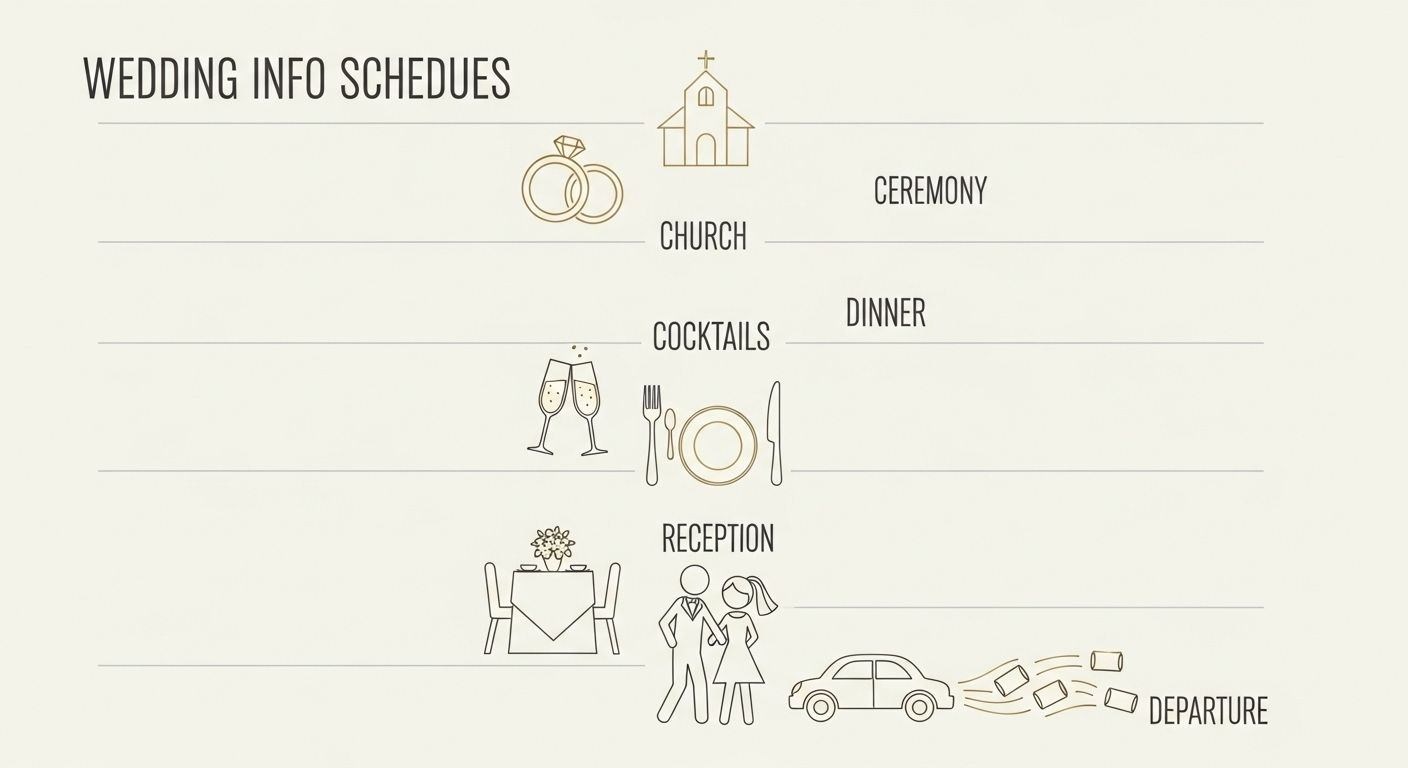
When to Cut Loose: Open Dancing and Late-Night Snacks
Now we’re talkin’. Once the formalities wrap, the real party starts. Open dancing usually runs 3–4 hours, depending on venue curfew and how much your DJ charges by the hour (average: $1,000–$2,500 USD). Smart couples build in a late-night snack—think sliders, pizza bites, or mini grilled cheese—around the 2-hour mark. Why? ‘Cause no one does the cha-cha sober after midnight. The typical wedding schedule knows that energy dips, so fuel it. Also, consider a “quiet lounge” for guests who just wanna sit and gossip without bass thumping through their ribs. Flexibility within structure—that’s the soul of a solid typical wedding schedule.
Timing Is Everything: The 30-5 Minute Rule Explained
Heard of the “30-5 minute rule”? It’s wedding-planner gospel. Basically, every major event in your typical wedding schedule should start no more than 30 minutes after its printed time—and ideally, just 5 minutes late. Why? Because guests will show up fashionably late, vendors need buffer room, and nobody likes standing around wondering if the cake’s gonna walk down the aisle. Sticking to this rule keeps things flowing without feeling rushed. Miss it? Suddenly your sunset photos happen under fluorescent lights. Nail it? You’ve got golden-hour glow *and* time to breathe. The typical wedding schedule thrives on gentle punctuality—not military precision, but not “whenever vibes” either.
Budgeting Like a Boss: The 50-30-20 Rule for Weddings
Let’s talk money—‘cause love don’t pay for string quartets. The “50-30-20 rule” for weddings ain’t official finance doctrine, but planners swear by it as a guideline. Allocate 50% of your budget to venue + catering (the biggies), 30% to aesthetics and experience (attire, decor, music, photos), and 20% to everything else (invites, favors, tips, emergency stain remover). For a $30,000 USD wedding? That’s $15k on food and space, $9k on making it look/feel magical, and $6k for the rest. Stick close to this split, and your typical wedding schedule won’t crumble under financial stress. Deviate wildly? You might end up with a chandelier but no chairs. Prioritize wisely, darlin’.
What to Actually Include in Your Wedding Schedule Doc
Your guests aren’t mind readers—so spell it out. A solid typical wedding schedule shared via wedding website or printed card should list:
- Ceremony start time (with arrival window)
- Cocktail hour location & duration
- Reception start time
- Dinner service style (plated, buffet, family-style)
- Key moments (first dance, cake, bouquet toss)
- End time (or “late-night dancing until…”)
Syncing It All: Tools, Tips, and Internal Wisdom
Alright, so you’ve got your vision. Now, how do you keep it all on track? Use digital tools like Google Sheets or wedding apps—but also assign a point person (not you!) to handle day-of timing. And hey, don’t reinvent the wheel. Check out resources like Events By Gather for templates, or dive into planning guides at Planning. Need a deep dive on timeline nuances? Our sister piece typical wedding agenda key details breaks it down minute by minute. Because nailing the typical wedding schedule isn’t about perfection—it’s about flow, joy, and leaving room for happy accidents (like when the flower girl steals the mic).
Frequently Asked Questions
What is the typical order of events at a wedding?
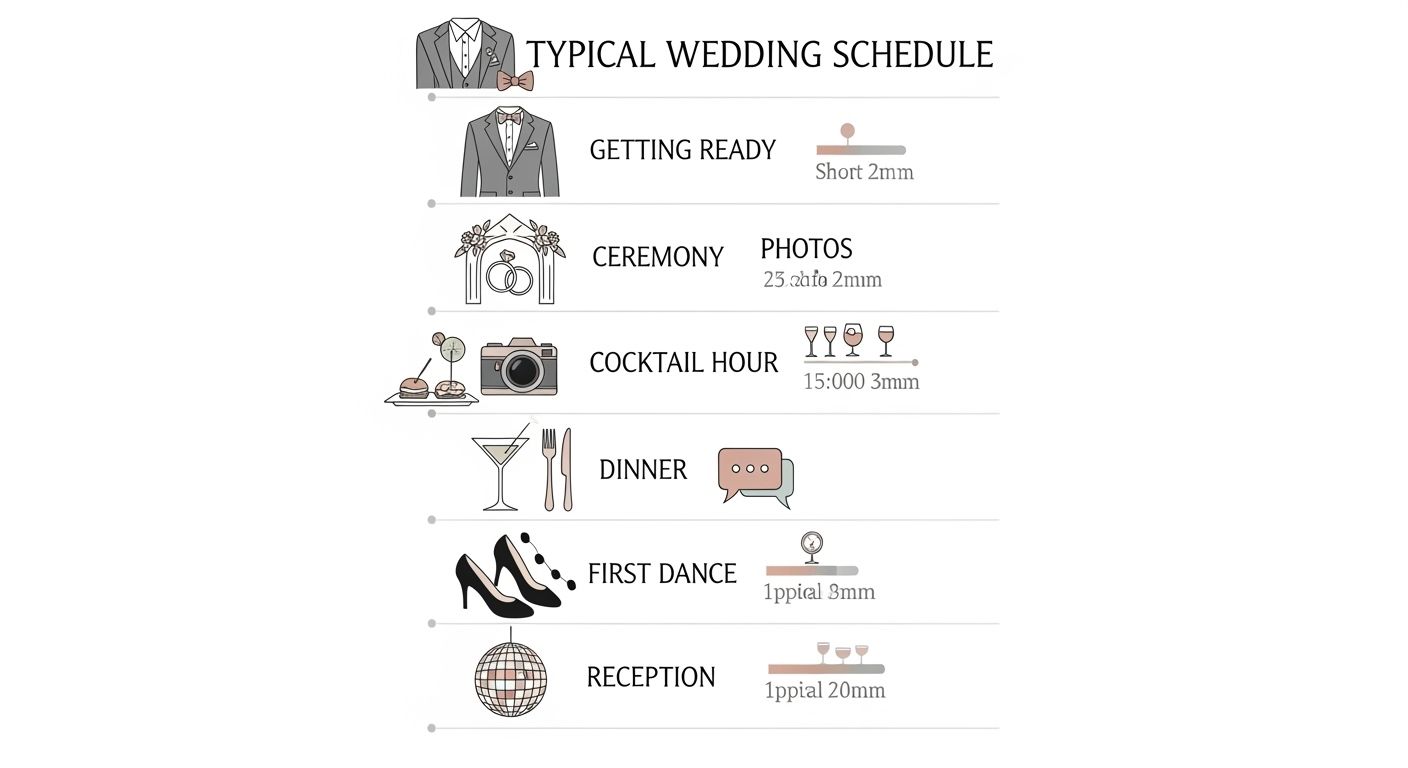
The typical wedding schedule flows like this: guest arrival → ceremony (20–45 min) → cocktail hour (60–90 min) → reception entrance → dinner → toasts → first dance & parent dances → cake cutting → open dancing → late-night snacks → send-off. Of course, cultural twists may vary, but this is the classic American blueprint.
What is the 50 30 20 rule for weddings?
While not a hard financial rule, the 50-30-20 guideline for weddings suggests allocating 50% of your budget to venue and catering, 30% to ambiance and experience (attire, music, photos), and 20% to miscellaneous costs like invites, favors, and tips. This balance helps maintain a smooth typical wedding schedule without overspending on one element.
What to include in a wedding schedule?
A clear typical wedding schedule should list ceremony start time, cocktail hour details, reception start, dinner format, key moments (first dance, cake, bouquet toss), and end time. Add practical notes like parking, dress code, and kid policy to keep guests informed and relaxed.
What is the 30 5 minute rule for weddings?
The 30-5 minute rule means major events in your typical wedding schedule should begin no later than 30 minutes after the printed time—and ideally just 5 minutes late. This accounts for natural delays while keeping the day from derailing. It’s flexibility with boundaries, y’all.
References
- https://www.theknot.com/content/wedding-day-timeline
- https://www.brides.com/wedding-reception-timeline-5089682
- https://www.weddingwire.com/wedding-ideas/wedding-day-schedule
- https://www.marthastewartweddings.com/7876493/wedding-day-timeline-guide