Typical Wedding Agenda Key Details
- 1.
What Even Is a Typical Wedding Agenda, Y’all?
- 2.
Why Timing Matters More Than Your Aunt’s Side-Eye at Open Bar
- 3.
The Ceremony: Where Love Gets Official (and Everyone Checks Their Phones)
- 4.
Cocktail Hour: The Secret MVP of the Typical Wedding Agenda
- 5.
Dinner & Toasts: When Emotions Run High (and So Do the Wine Refills)
- 6.
First Dance, Parent Dances, and Other Moments That Make You Ugly-Cry
- 7.
Cake Cutting: More Than Just a Photo Op (But Yeah, It’s Mostly a Photo Op)
- 8.
Open Dancing: Where the Party Actually Begins
- 9.
Budget Hacks Hidden in Plain Sight Within Your Typical Wedding Agenda
- 10.
Common Pitfalls That Derail Even the Best-Laid Typical Wedding Agendas
Table of Contents
typical wedding agenda
What Even Is a Typical Wedding Agenda, Y’all?
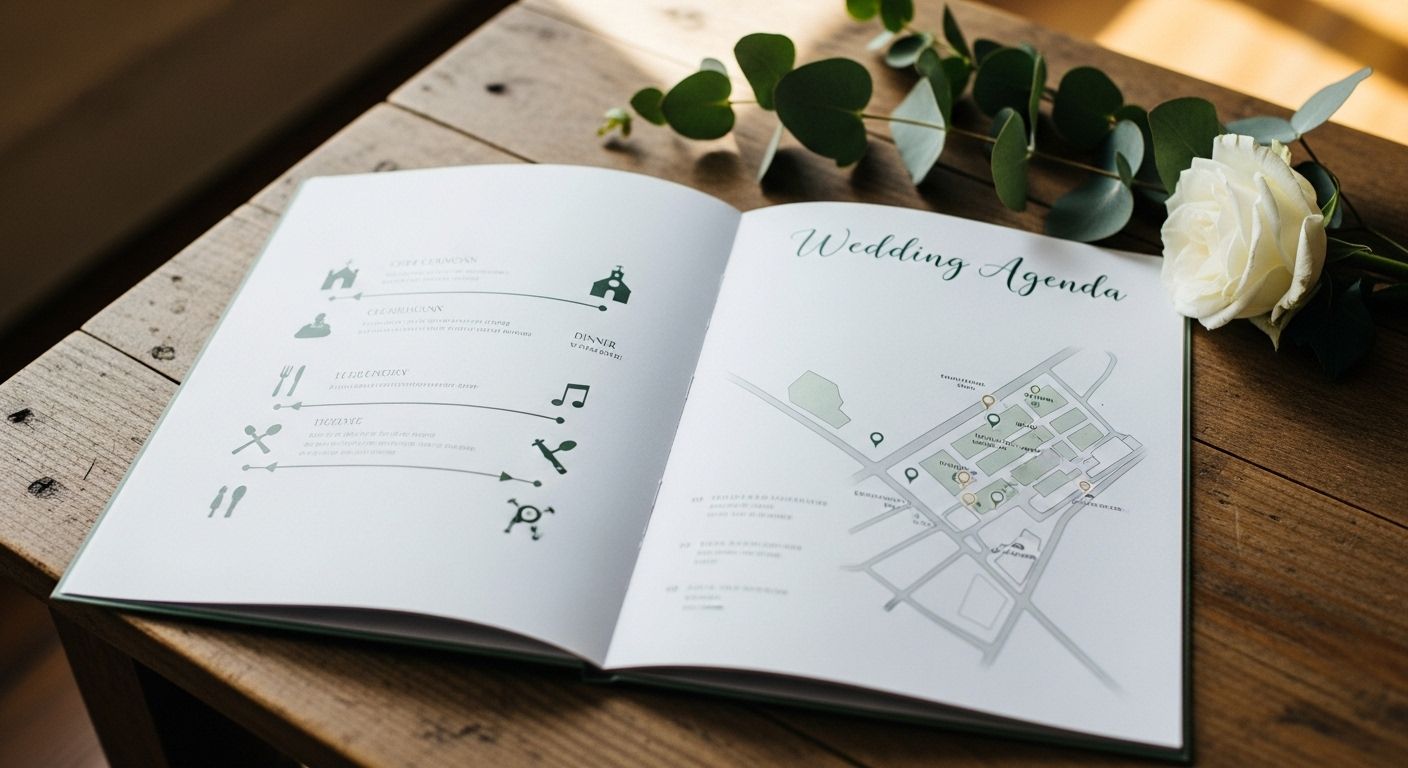
Ever been to a weddin’ and thought, “Wait… is the cake supposed to come before or after the first dance?” Yeah, we’ve all been there—sittin’ awkwardly in our rented tuxes or chiffon gowns, wonderin’ if it’s cool to sneak a bite of hors d’oeuvres before the vows. Truth be told, a typical wedding agenda ain’t just a random list of stuff—it’s like a well-choreographed ballet, but with more champagne and fewer pirouettes (unless your cousin’s had a few too many mimosas). The typical wedding agenda usually kicks off with the ceremony, flows into cocktails, then dinner, dances, cake, and finally that bittersweet send-off where everyone’s cryin’ but also laughin’ ‘cause Uncle Larry just moonwalked across the parking lot. It’s messy, magical, and—when done right—downright unforgettable.
Why Timing Matters More Than Your Aunt’s Side-Eye at Open Bar
Let’s keep it 100: a typical wedding agenda lives or dies by its timing. You can have the fluffiest cake, the sparkliest chandeliers, and a DJ who spins like he’s got Beyoncé on speed dial—but if your timeline’s whack? Honey, you’re toast. Most pros swear by starting the ceremony no later than 4 PM for outdoor summer nuptials, ‘cause nobody wants their makeup meltin’ faster than the ice sculptures. Indoors? You got a bit more wiggle room, but still—don’t let golden hour slip through your fingers. A tight typical wedding agenda keeps guests engaged, vendors sane, and your photographer from missin’ that tearful grandma moment ‘cause y’all were still arguin’ over seating charts. Pro tip: build in 15-minute buffers. Life happens—like when the flower girl decides mid-aisle that she’d rather chase butterflies than petals.
The Ceremony: Where Love Gets Official (and Everyone Checks Their Phones)
Alright, so the typical wedding agenda always starts with the ceremony—that sacred, slightly nerve-wracking chunk where two people promise to tolerate each other’s weird habits for eternity. Guests usually start rollin’ in 30 minutes prior, which gives ‘em time to find seats, whisper about the bride’s dress, and pretend they didn’t just spill coffee on their lap. The processional kicks things off, followed by readings, vows, ring exchange, and the big “I now pronounce you…” moment. Keep it under 30 minutes if you can—attention spans these days are shorter than a TikTok clip. And remember: even if your officiant’s got the charisma of a soggy crouton, the typical wedding agenda demands this part feel intimate, not interminable.
Cocktail Hour: The Secret MVP of the Typical Wedding Agenda
While the newlyweds are off playin’ photogenic newlyweds (aka smilin’ like maniacs for pics), guests get ushered into cocktail hour—the unsung hero of any typical wedding agenda. This lil’ window (usually 60–90 minutes) is where magic happens: minglin’, sippin’ signature drinks named after your dog, and scarfing down mini lobster rolls like you ain’t seen food in weeks. It’s also prime time for your band or DJ to set the vibe—think smooth jazz, not dubstep. Strategically, cocktail hour gives your venue crew time to flip the ceremony space into reception mode. Miss this buffer? Congrats, your guests will watch chairs get stacked while you’re tryna cut cake. Not cute. A well-paced typical wedding agenda treats cocktail hour like the breathing room it is—essential, elegant, and full of tiny meatballs.
Dinner & Toasts: When Emotions Run High (and So Do the Wine Refills)
Once everyone’s seated (pray the seating chart didn’t spark a family feud), the typical wedding agenda shifts to dinner—and this is where things get real. First course, main dish, maybe dessert later… but before forks even hit plates, expect a cascade of toasts. Dad’s gonna cry. Best man’s gonna tell that one story you begged him not to. And someone—probably your second cousin twice removed—will raise a glass “to love, laughter, and happily ever after.” Keep toasts tight (3–5 minutes max per speaker) so folks don’t start eyein’ the bread basket like it’s their lifeline. Oh, and pro move? Serve wine *during* toasts, not after. Because let’s be honest—some of those speeches need liquid courage to sit through. All of this? Core to a smooth-sailin’ typical wedding agenda.
First Dance, Parent Dances, and Other Moments That Make You Ugly-Cry
Right after dinner (or sometimes before cake—depends on your DJ’s mood), the typical wedding agenda cues up the dance floor drama. Newlyweds glide into their first dance—maybe it’s a choreographed salsa, maybe it’s just swayin’ like two confused penguins. Either way, tissues should be pre-distributed. Then come the parent dances: mom with son, dad with daughter, or however your fam rolls. These moments? Pure gold. They’re short (2–3 minutes each), sweet, and guaranteed to make at least three aunts dab their eyes with napkins. Don’t skip ‘em for the sake of “keeping things movin’”—they’re emotional anchors in your typical wedding agenda, and guests eat that stuff up like free cake.
Cake Cutting: More Than Just a Photo Op (But Yeah, It’s Mostly a Photo Op)
Here’s the tea: the cake-cutting ritual in a typical wedding agenda isn’t really about dessert—it’s about symbolism, tradition, and Instagrammable chaos. Traditionally, the couple cuts the first slice together, feeds each other a bite (watch out for smears!), and boom—you’re officially married *and* sugar-rushed. Some couples serve sheet cake to guests (saves $$) while keepin’ the fancy tiered beauty intact for photos. Budget-wise, wedding cakes average $500–$800 USD, but hey—if you’re splurgin’, go wild. Just don’t let the cake sit under heat lamps for three hours before cuttin’. Nobody wants fondant soup. In the grand scheme of your typical wedding agenda, this moment’s brief but iconic—like the cherry on top of a very emotional sundae.
Open Dancing: Where the Party Actually Begins
Once the formalities wrap, the typical wedding agenda flips the script: lights dim, bass drops, and suddenly Grandma’s twerking (okay, maybe not—but she’s definitely doin’ the Electric Slide). This is the heart of the reception—the unstructured, joyful chaos where friendships form over shared love of 90s hip-hop and questionable karaoke choices. A killer DJ reads the room: starts slow, builds energy, throws in crowd-pleasers (“Shout!” anyone?), and knows when to pivot from “Uptown Funk” to “All Too Well (10 Minute Version)” for maximum emotional whiplash. Keep the dance floor open for at least 2–3 hours; cutting it short ‘cause you’re tired = wedding sin #42. Remember: your typical wedding agenda isn’t complete ‘til someone loses a shoe and finds a new bestie.
Budget Hacks Hidden in Plain Sight Within Your Typical Wedding Agenda
Let’s talk dollars, baby. The average U.S. wedding costs around $30,000 USD—but here’s the kicker: your typical wedding agenda can actually help you save. How? By trimmin’ fat where it don’t hurt. Example: skip the plated dinner ($120/head) for a stylish buffet ($75/head). Or schedule your wedding on a Friday or Sunday—venues often slash rates by 20–30%. And that “open bar”? Switch to beer, wine, and one signature cocktail—cuts costs without killin’ vibes. Also, digital invites > paper (saves $400+). Every line item in your typical wedding agenda is a chance to prioritize what matters (photos, food, fun) over what don’t (monogrammed napkins nobody’ll remember). Smart planning = more honeymoon fund, less stress sweat.
Common Pitfalls That Derail Even the Best-Laid Typical Wedding Agendas
Look, even Martha Stewart’s wedding would’ve had hiccups if she forgot to hydrate. Common typical wedding agenda fails? Startin’ too late (guests get hangry), skippin’ vendor meals (angry caterers = cold chicken), or overloadin’ the timeline with “must-haves” till it’s tighter than skinny jeans after Thanksgiving. Also—never assume your photographer knows your shot list. Give ‘em a printed copy! And for Pete’s sake, assign a point person (not you!) to handle day-of fires. You should be kissin’, cryin’, and dancin’—not arguin’ with the florist over peonies. Avoid these traps, and your typical wedding agenda stays smooth as butter on warm cornbread. Speaking of smooth moves, don’t forget to check out Events By Gather for more inspo, swing by our Planning hub, or dive deep into typical wedding reception timeline pro hacks if you’re geekin’ out on timelines like we are.
Frequently Asked Questions
What is the typical order of events at a wedding?
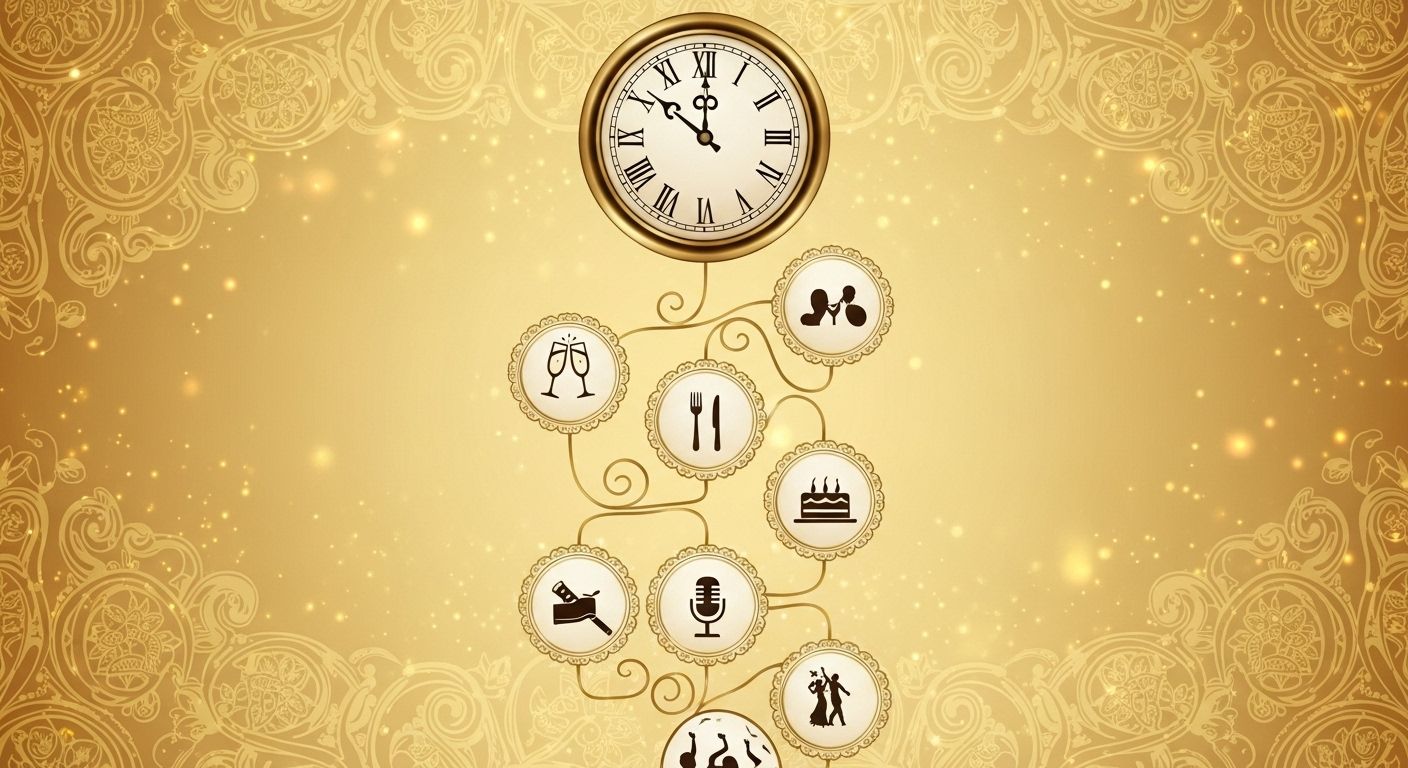
The typical wedding agenda usually follows this flow: guest arrival → ceremony → cocktail hour → reception entrance → dinner → toasts → first dance → parent dances → cake cutting → open dancing → send-off. Of course, couples can shuffle it based on vibe, venue, or how much tequila’s been consumed by 6 PM.
What is the 50 30 20 rule for weddings?
Borrowed from personal finance, the 50/30/20 rule adapted for weddings suggests allocating 50% of your budget to essentials (venue, food, photography), 30% to “wants” (flowers, decor, entertainment), and 20% to savings or unexpected costs. This framework helps keep your typical wedding agenda both beautiful and financially sane.
What is the typical flow of a wedding reception?
A standard reception within the typical wedding agenda begins with guest entry and welcome drinks, followed by the couple’s grand entrance, dinner service, speeches/toasts, first dance, parent dances, cake cutting, and then open dancing until the farewell (sparklers, bubbles, or getaway car included).
What is the 30 5 rule for weddings?
The 30/5 rule isn’t widely standardized, but some planners use it to mean: keep ceremony under 30 minutes and limit each toast to 5 minutes max. This keeps your typical wedding agenda engaging and prevents guests from checking watches—or worse, sneaking out for a smoke break during vows.
References
- https://www.theknot.com/content/wedding-day-timeline
- https://www.brides.com/wedding-reception-timeline-5089865
- https://www.weddingwire.com/wedding-ideas/wedding-day-schedule
- https://www.marthastewartweddings.com/7891267/wedding-day-timeline-hour-by-hour-guide