
Typical Order of Wedding Ceremony Must-Know Flow
- 1.
Who Walks Down the Aisle and in What Order?
- 2.
What Is the Order of Events for a Wedding?
- 3.
How Does the Ceremony Differ Across Regions in the U.S.?
- 4.
Why Timing Matters in the Typical Order of Wedding Ceremony
- 5.
Common Missteps Couples Make During the Processional
- 6.
How Music Sets the Rhythm of the Typical Order of Wedding Ceremony
- 7.
What Role Do Readings and Rituals Play in the Flow?
- 8.
How to Personalize the Typical Order of Wedding Ceremony Without Losing Structure
- 9.
Should You Include Kids or Pets in the Processional?
- 10.
Where to Learn More About Planning Your Own Ceremony Flow
Table of Contents
typical order of wedding ceremony
Who Walks Down the Aisle and in What Order?
Ever wonder why Aunt Marge looks like she’s about to trip over her own heels while clutchin’ that bouquet like it’s a life raft? Well, honey, it ain’t random—there’s a whole typical order of wedding ceremony choreography goin’ on, and it starts with who struts down that aisle first. Traditionally, the processional kicks off with the officiant makin’ their grand entrance, followed by the groom and his groomsmen (usually from the side, not the aisle—keep it low-key, fellas). Then comes the bridesmaids, one by one, often paired with groomsmen if the couple’s feelin’ fancy. Flower girls and ring bearers? They’re the showstoppers next—tiny humans carryin’ big symbolism. And finally… drumroll please… the bride! Usually escorted by a parent or someone meaningful, she’s the main event, and the crowd knows it. This sequence might shift depending on cultural vibes or how “non-tradish” the couple’s feelin’, but the typical order of wedding ceremony aisle walk sets the tone for everything that follows.
What Is the Order of Events for a Wedding?
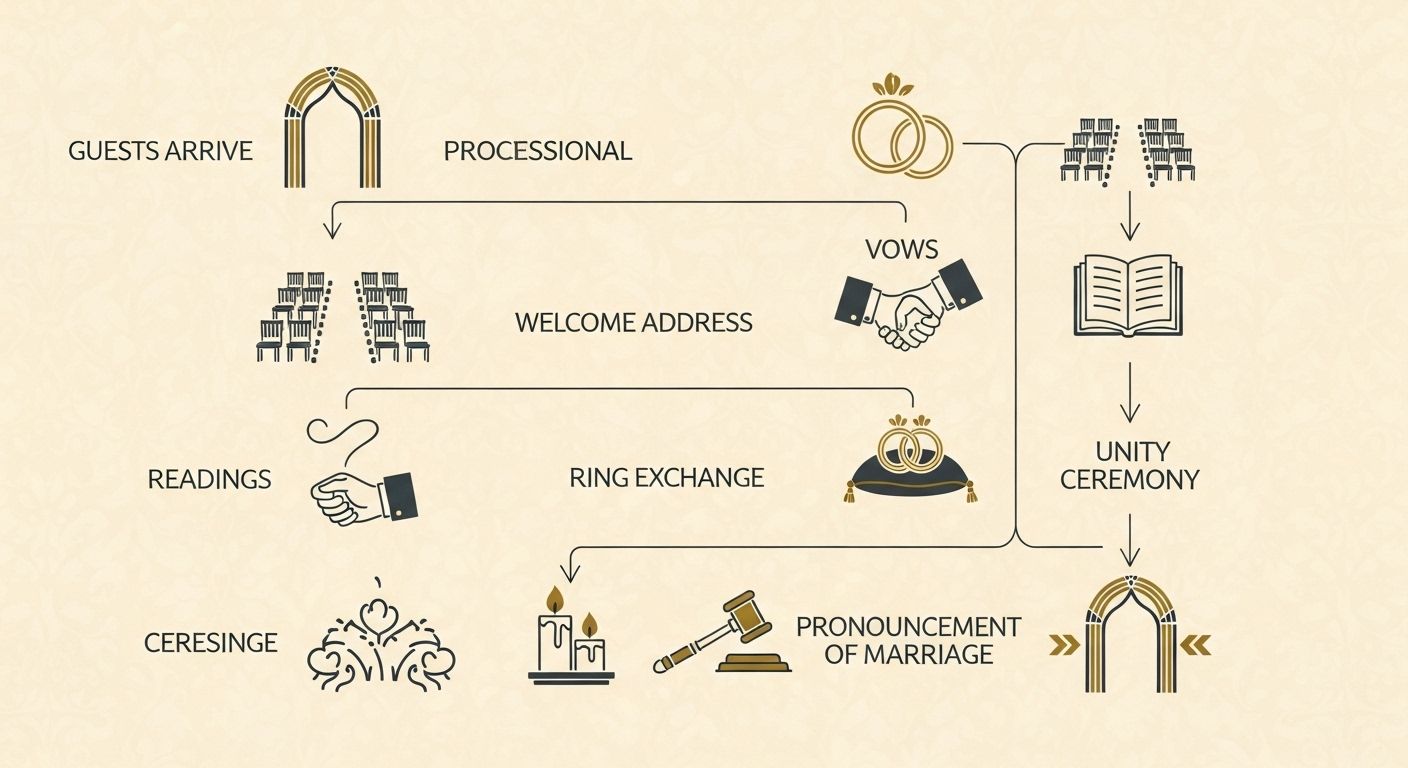
Alright, y’all—let’s break it down like we’re plannin’ this shindig over sweet tea and biscuits. The typical order of wedding ceremony ain’t just “say I do and boom, cake.” Nah. It usually flows like this: processional (we covered that), then words of welcome from the officiant, followed by readings or musical interludes if the couple’s into that poetic jazz. Next up: the declaration of intent (“Do you take…?”—cue sniffles), exchange of vows (handwritten or traditional, your call), ring exchange (don’t drop ‘em!), and then the big ol’ pronouncement: “You’re hitched!” After that, the recessional—everyone walks back out lookin’ ten times happier than they did walkin’ in. Some folks toss petals, some blast confetti, but the typical order of wedding ceremony wraps with pure joy and maybe a little happy chaos. Oh, and don’t forget the kiss—it’s legally required by the Department of Vibes, probably.
How Does the Ceremony Differ Across Regions in the U.S.?
Down South, you might see sweet tea served post-“I do,” while up in New England, they’re more likely to toast with local craft cider. But even within the good ol’ USA, the typical order of wedding ceremony can flex based on regional flavor. In Texas? Boots under the dress, y’all—cowboy hats optional but encouraged. In California? Barefoot on the beach, sunset backdrop, and maybe a ukulele cover of “Can’t Help Falling in Love.” Midwest weddings lean cozy—think barns, string lights, and grandma’s famous pie table. Still, the backbone stays consistent: processional, vows, rings, kiss, recessional. The typical order of wedding ceremony adapts like denim—it fits every body, but the wash changes. Whether you’re sayin’ “howdy” or “hey there,” the heart of the ritual remains rooted in love, commitment, and slightly nervous laughter.
Why Timing Matters in the Typical Order of Wedding Ceremony
Let’s be real—nobody wants to stand in a swelterin’ church at 3 PM in July waitin’ for Uncle Bob to stop adjustin’ his tie. That’s why nailing the timing within the typical order of wedding ceremony is crucial. Most ceremonies clock in at 20–30 minutes, which is just enough time to feel meaningful without losin’ the attention span of the flower girl (or your second cousin who’s already eyeing the open bar). Officiants know to keep it tight: welcome (2 mins), readings (5), vows (7), rings (3), pronouncement (1)—boom, done. Stretch it too long, and you risk guests checkin’ their phones mid-vow. Keep it too short, and it feels rushed, like microwave popcorn. The sweet spot? A well-paced, emotionally resonant arc that honors the typical order of wedding ceremony without draggin’ its feet. Remember: brevity is the soul of wit… and also of not-melting-in-your-tux.
Common Missteps Couples Make During the Processional
You’d think walkin’ in a straight line wouldn’t be rocket science, but oh honey, we’ve seen it all. One groomsmen tripped over his own cummerbund. A flower girl refused to leave the limo. Another couple forgot to cue the music, so the entire bridal party stood awkwardly for 45 seconds like mannequins in a silent film. These hiccups happen when the typical order of wedding ceremony isn’t rehearsed—or worse, when folks wing it. Pro tip: run through the processional at least once. Assign someone to cue the DJ or organist. Make sure the ring bearer knows the ring’s fake (unless you trust a 4-year-old with $8,000 in platinum). And for Pete’s sake, confirm who’s walkin’ with whom—no one wants an odd number of attendants marchin’ solo like they lost a game of musical chairs. Nail the flow, and the typical order of wedding ceremony becomes smooth as bourbon on a winter night. 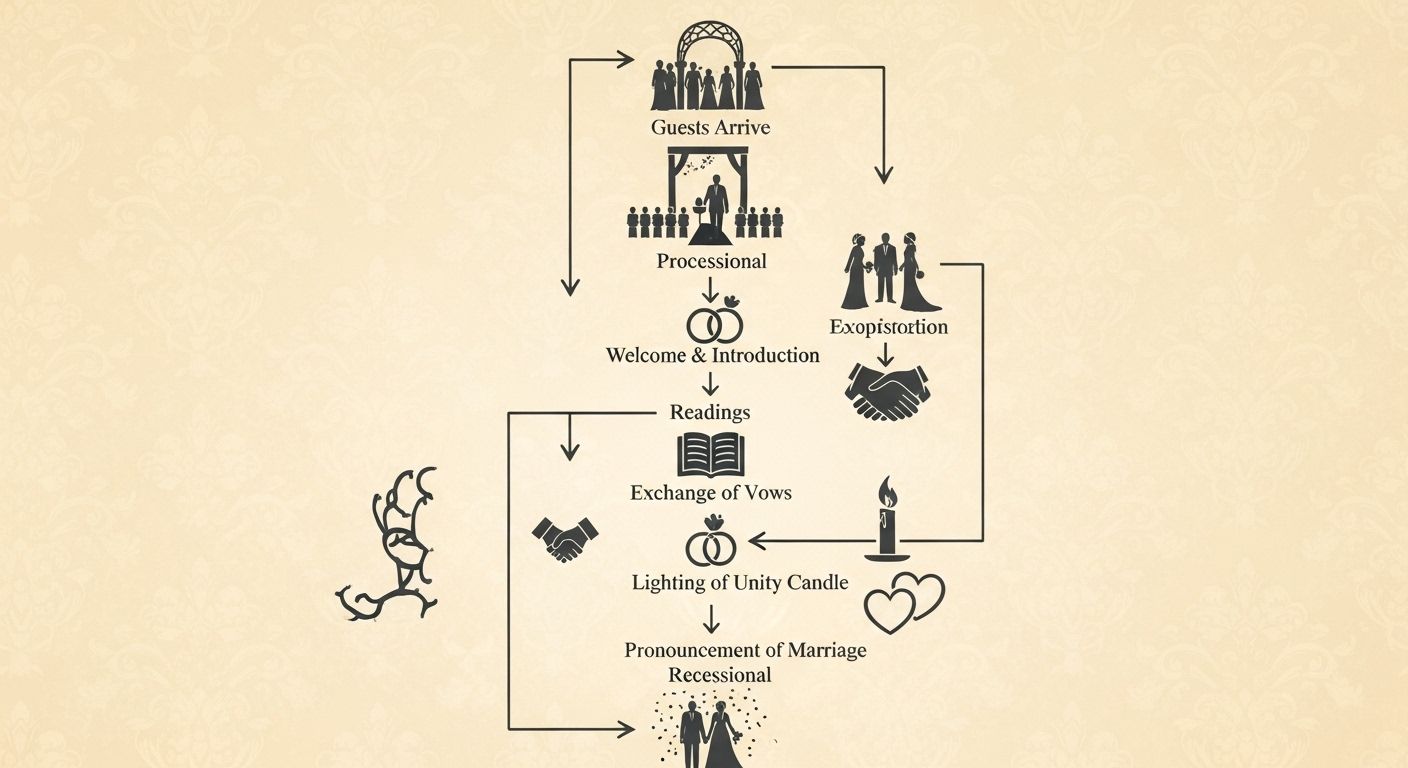
How Music Sets the Rhythm of the Typical Order of Wedding Ceremony
Music ain’t just background noise—it’s the heartbeat of the typical order of wedding ceremony. Think about it: the soft piano swell as the moms are seated, the gentle guitar strum as the bridesmaids glide in, then BAM—“Canon in D” or “A Thousand Years” hits, and the whole room holds its breath. That’s emotional engineering, baby. The right song can turn a hallway into a runway and a nervous bride into a goddess. And don’t sleep on the recessional tune! That’s when the party officially starts—so pick somethin’ upbeat, joyful, maybe even a little sassy. Live quartet? Recorded playlist? Bagpipes? (Hey, if it’s your thing!) Just make sure each musical cue aligns with the typical order of wedding ceremony beats. Miss a cue, and you’re walkin’ down the aisle to dead air. Hit it right, and you’ve got a memory scored like a movie scene.
What Role Do Readings and Rituals Play in the Flow?
Not every couple wants a cookie-cutter “do you take…” script—and that’s where personalized readings and symbolic rituals slide in like a well-timed plot twist. Maybe it’s a Maya Angelou poem, a passage from “The Little Prince,” or a Native American unity candle ceremony. These moments nestle right into the typical order of wedding ceremony, usually after the welcome and before the vows. They add depth, heritage, or just plain personality. But here’s the kicker: don’t overload it. Two readings max, unless you’re aimin’ for a TED Talk. And if you’re doin’ a sand ceremony, handfasting, or wine blending, brief your guests so they’re not squintin’ like, “Wait, are they makin’ a smoothie?” When woven thoughtfully, these elements enrich the typical order of wedding ceremony without derailing its natural momentum.
How to Personalize the Typical Order of Wedding Ceremony Without Losing Structure
Look, tradition’s cool—but your love story ain’t generic, so why should your ceremony be? You can absolutely remix the typical order of wedding ceremony while keepin’ its skeleton intact. Swap “father gives away the bride” for “both parents walk her down.” Let your dog carry the rings (with supervision, please). Write vows that reference your first disastrous date at that taco truck in Austin. The key? Keep the core sequence—entrance, intention, vows, rings, kiss, exit—then sprinkle your magic in between. Guests still recognize the ritual, but it feels unmistakably *you*. And hey, if your officiant’s cool with it, throw in a surprise duet or a moment of silence for loved ones passed. The typical order of wedding ceremony is a canvas, not a cage. Paint it wild, but don’t lose the frame.
Should You Include Kids or Pets in the Processional?
Kids and pets? Bless their hearts—they’re adorable chaos agents. Including them in the typical order of wedding ceremony can be magical… or mildly catastrophic. Flower girls might freeze mid-aisle. Ring-bearing labs might decide the altar’s a fire hydrant. So, manage expectations. Practice with them. Have a backup human ready to swoop in. And never, ever force a shy kid or anxious pup into the spotlight. If they’re comfortable, they’ll add warmth and humor that no professional planner can replicate. But remember: the typical order of wedding ceremony should serve the couple’s joy—not become a hostage negotiation with a toddler in tulle. When it works? Pure gold. When it doesn’t? Still kinda cute. Just have tissues handy… for laughs or tears.
Where to Learn More About Planning Your Own Ceremony Flow
If you’re knee-deep in Pinterest boards and still feelin’ lost, don’t sweat it—help’s out there. Start by browsin’ trusted resources that break down the typical order of wedding ceremony with real examples and printable timelines. For starters, swing by the Events By Gather homepage for vibe checks and pro tips. Dive deeper into the Planning section for step-by-step guides. And if you’re wonderin’ how big your guest list should be while mapin’ out your ceremony, peep this gem: Average Size of a Wedding: Key Insights. These spots’ll give you the scaffolding—you bring the soul. Because at the end of the day, the typical order of wedding ceremony isn’t about perfection—it’s about presence, promise, and the people who matter most.
Frequently Asked Questions
Who walks down the aisle and in what order?
In the typical order of wedding ceremony, the processional usually begins with the officiant, followed by groomsmen (often entering from the side), then bridesmaids, flower girls, ring bearers, and finally the bride—typically escorted by a parent or loved one. This sequence may vary based on cultural or personal preferences, but it maintains the ceremonial buildup central to the typical order of wedding ceremony.
What is the order of events for a wedding?
The typical order of wedding ceremony includes: processional, welcome by the officiant, readings or musical performances, declaration of intent, exchange of vows, ring exchange, pronouncement of marriage, the kiss, and recessional. Optional elements like unity rituals or cultural traditions can be woven in, but the core flow remains consistent across most U.S. weddings following the typical order of wedding ceremony.
What is the normal flow of a wedding reception?
While the reception isn’t part of the typical order of wedding ceremony, it usually follows the ceremony with: guest arrival and cocktail hour, grand entrance of the couple, first dance, welcome toast, dinner service, parent dances, cake cutting, open dancing, bouquet/garter toss (optional), and send-off. The reception complements the ceremony’s emotional tone but operates on its own festive timeline, separate from the typical order of wedding ceremony.
What is the 50 30 20 rule for weddings?
The 50-30-20 rule isn’t directly tied to the typical order of wedding ceremony but is a budgeting guideline: 50% for essentials (venue, food, attire), 30% for discretionary items (flowers, decor, entertainment), and 20% for savings or unexpected costs. While helpful for financial planning, it doesn’t dictate the structure of the typical order of wedding ceremony, which focuses on ritual sequence rather than spending.
References
- https://www.theknot.com/content/wedding-ceremony-order
- https://www.brides.com/wedding-ceremony-order-of-events-5088748
- https://www.weddingwire.com/wedding-ideas/wedding-ceremony-order
- https://www.marthastewartweddings.com/7891263/wedding-ceremony-order-of-events